
Part of the Crave Grocer Korean Flavor Guide: real Korean flavors, explained for everyday snacking and cooking in the US.
Ask Korean friends about nurungji and you will often get a story about a grandmother scraping the bottom of a rice pot. It is one of those foods that started as a happy accident and became a flavor of its own.
What nurungji is
Nurungji (누룽지) is the layer of rice that toasts and crisps against the bottom of the pot when rice is cooked. In the days of the heavy iron pot called a gamasot, a golden crust formed almost every time. Rather than waste it, cooks scraped it out in sheets.
Modern electric rice cookers rarely make a crust, so in Korea today you can buy nurungji ready-made in packs, and some restaurants still serve it from the pot.
How Koreans eat it
There are two main ways:
- As a crunchy snack. Dry nurungji is broken into pieces and eaten like a cracker. Some people add a little sugar.
- As a warm drink or soft porridge. Hot water poured into the pot over the crust makes sungnyung (숭늉), a toasty rice water traditionally sipped after a meal. Simmer it longer and you get a soft, comforting rice porridge.
Plenty of Korean restaurants still bring out a pot of nurungji or sungnyung at the end of a meal. It is a quiet, homey way to finish.
What does nurungji taste like?
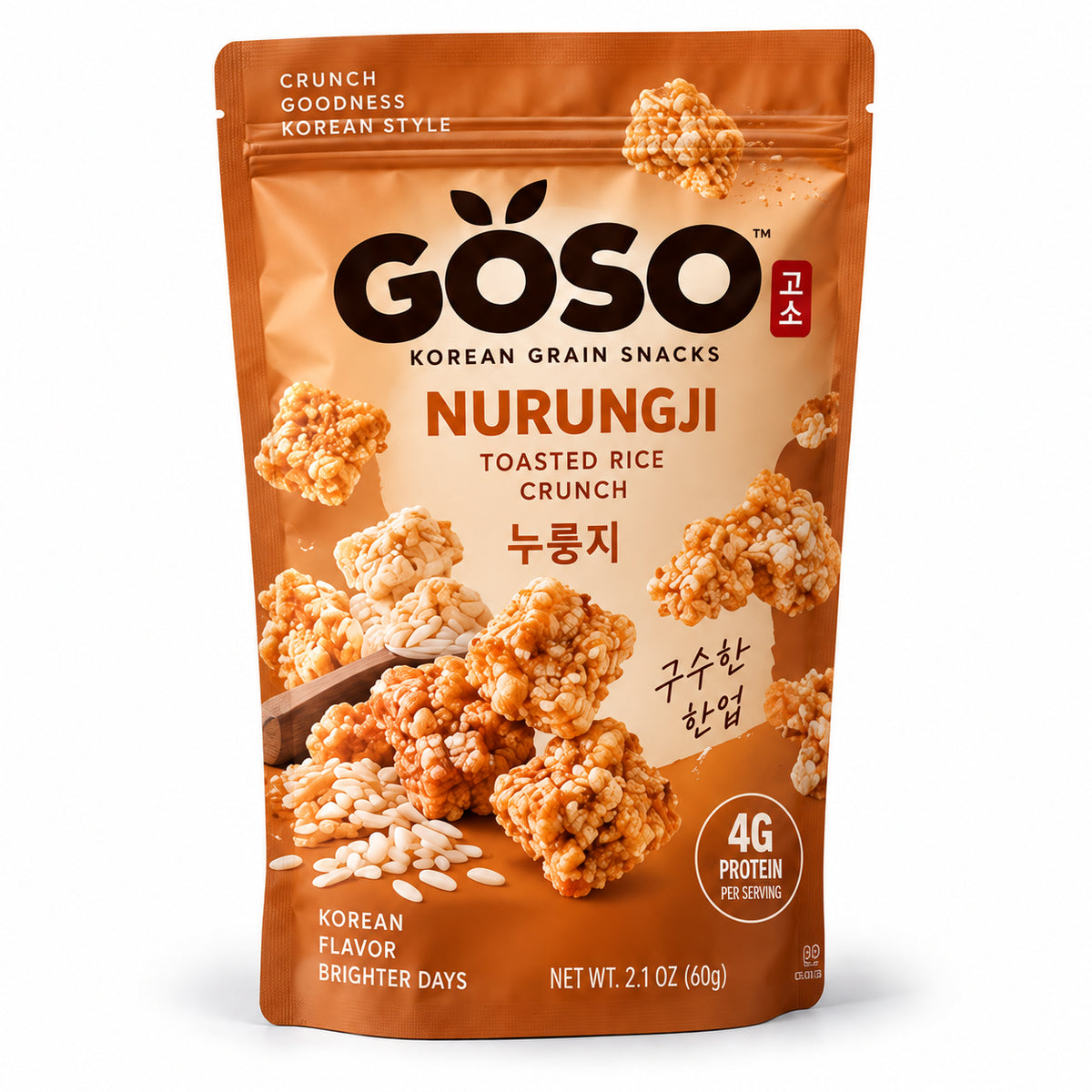
Think of the best part of a pan of fried rice, the bits that stuck and went brown. Nurungji is toasty and nutty, with a light natural sweetness that comes from browning the rice. It is not salty on its own. The texture is the point: hard and crackly when dry, softer when it meets hot water.
Because the flavor is simple, it pairs well with almost anything. It is the GÖSO flavor we recommend to people who say they do not like sweet snacks.
How GÖSO Nurungji uses it
GÖSO Korean Grain Snacks are a puffed and toasted grain crunch made with real grains. The Nurungji flavor is a toasted rice crunch, our take on that crust from the bottom of the pot. It comes in a 2.1 oz (60g) pouch, sold in 3-, 6- and 12-Packs of one flavor.
Ways to eat GÖSO Nurungji
- As a desk snack when you want crunch without much sweetness.
- Over a bowl of soup or a rice bowl right before you eat, so it stays crisp on top.
- With a hot tea. Barley tea or a plain green tea brings out the toasted rice side.
- Shaken with a pinch of Crave Garlic Sesame seasoning if you want it savory.
Nurungji vs. other toasted rice snacks
Many rice cultures prize the crust at the bottom of the pot, from Spanish socarrat in paella to Persian tahdig. Nurungji is the Korean version, and what makes it distinct is how it is eaten: as a plain snack, or turned into a drink to end the meal. That plain, toasty profile is what we kept in GÖSO Nurungji.
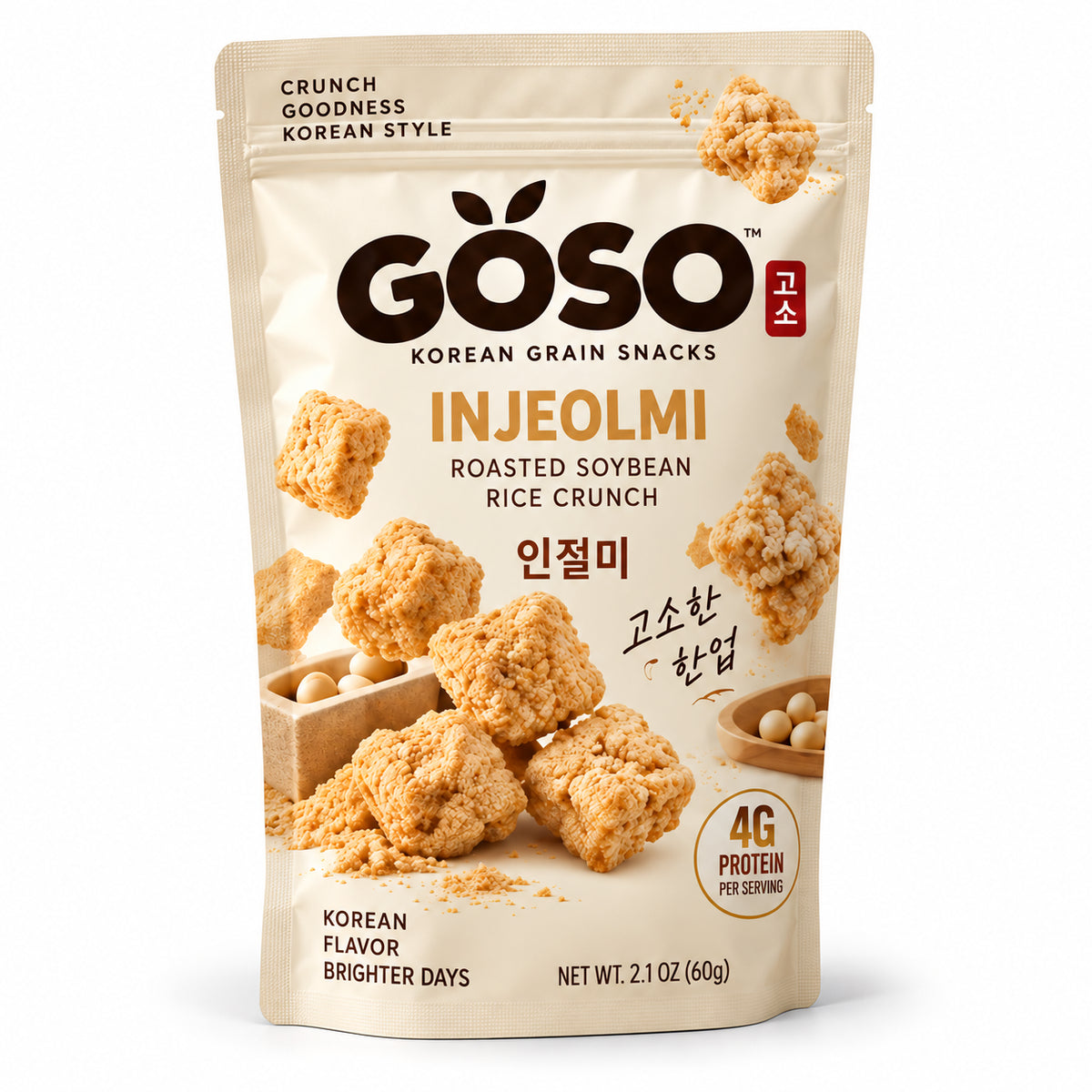
If you want a sweeter, nuttier GÖSO, try Injeolmi. If you want savory, try Korean BBQ or Seaweed Sesame. All five flavors are on the GÖSO collection page.
FAQ
What does nurungji mean?
It refers to the scorched or toasted rice crust at the bottom of the pot.
Is nurungji burnt rice?
No. It is toasted to golden brown, not blackened. Burnt rice tastes bitter; good nurungji tastes nutty and lightly sweet.
What is sungnyung?
A warm drink made by pouring hot water over the rice crust in the pot. It is traditionally served after a meal.
Is GÖSO Nurungji spicy?
No. It is a toasted rice crunch without heat.
More from the Korean Flavor Guide
Crave started from one simple idea: Korean flavor should be easy to enjoy at home. This guide is where we explain the flavors behind what we make, so you know what you are tasting before you open the bag or the bottle.
- What is injeolmi?
- How to use gochujang seasoning
- Korean snacks to try: a starter guide
- Korean snack gift ideas
Browse everything in one place: Korean snacks, Korean seasonings and Korean snack gifts.

Leave a comment
This site is protected by hCaptcha and the hCaptcha Privacy Policy and Terms of Service apply.