
Part of the Crave Grocer Korean Flavor Guide: real Korean flavors, explained for everyday snacking and cooking in the US.
Korean snacks are easier to find in the US than ever, but the flavors can be confusing if you did not grow up with them. What is injeolmi? Why is there seaweed in a snack? Is everything spicy? (It is not.) This guide sorts Korean snack flavors into a few families so you know where to start.
1. Nutty and toasty: roasted soybean, black sesame and toasted rice
A lot of Korean sweets are only lightly sweet. The flavor comes from roasting grains, beans and seeds.
- Injeolmi (roasted soybean): the powder that coats a classic Korean rice cake. Nutty and gently sweet. Read more in What is injeolmi?
- Black sesame: rich and toasty, used in Korean porridge and desserts.
- Nurungji (toasted rice): the crisp rice crust from the bottom of the pot. More in our nurungji guide.
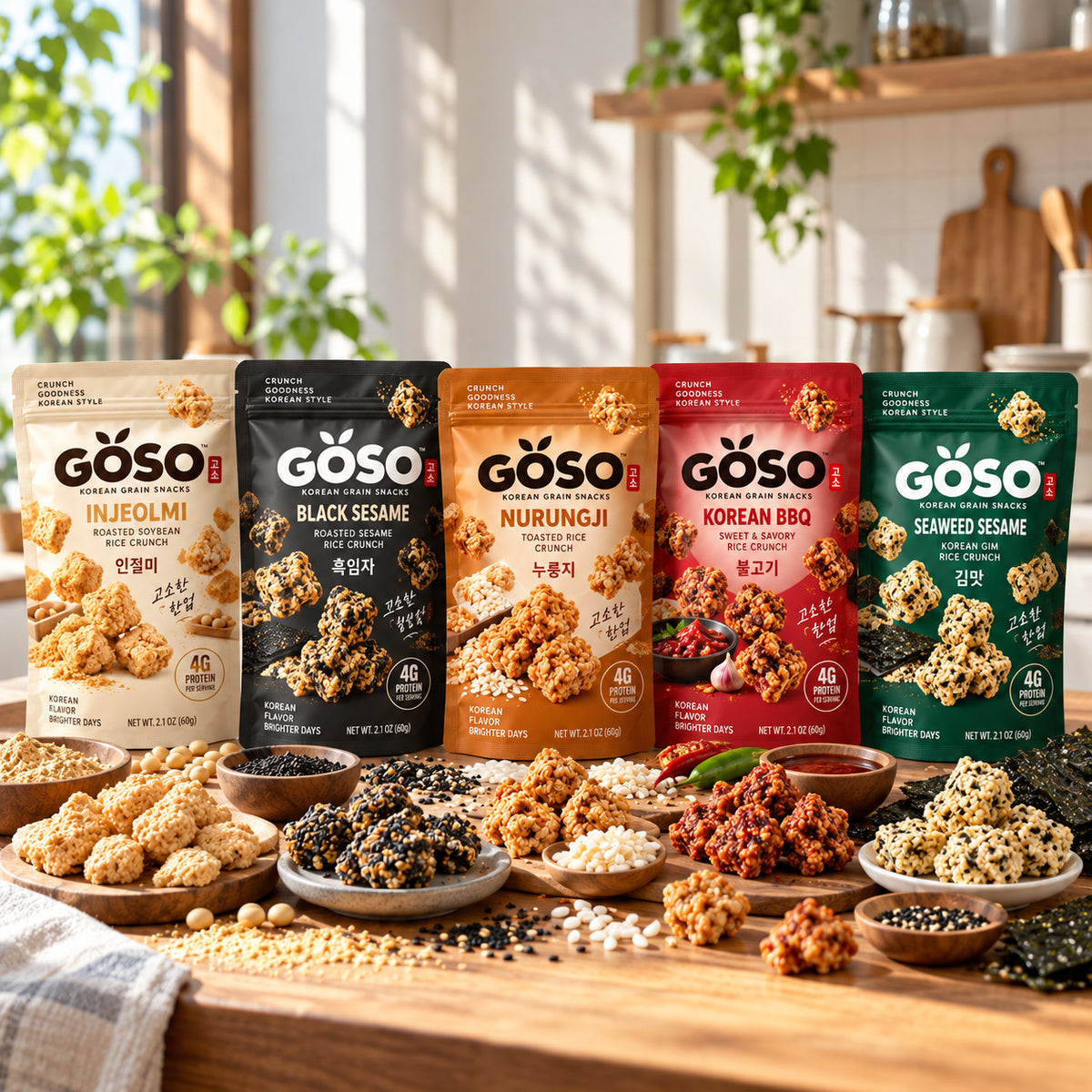
Start with: GÖSO Injeolmi, Black Sesame or Nurungji. GÖSO is a puffed and toasted grain crunch in 2.1 oz (60g) pouches.
2. Savory sea flavors: gim and sesame
Gim (김) is roasted seaweed, usually brushed with oil and salt. Koreans wrap rice in it, eat it as a side dish, and snack on it straight from the pack. If you have only had seaweed in sushi, roasted gim is crisper and more savory.
Start with: GÖSO Seaweed Sesame, savory gim with sesame.
3. Korean BBQ flavors: soy, garlic and a little sweetness
This is the easiest family for most Americans, because it is close to barbecue. Korean grilled meat marinades lean on soy sauce, garlic, sesame and sugar. Bulgogi is the best-known example.
Start with: Kernel Kim Korean BBQ or Bulgogi BBQ popcorn, or GÖSO Korean BBQ. None of them are spicy.
4. Heat: gochugaru, kimchi and gochujang
Korean heat usually comes from gochugaru (red pepper flakes) or gochujang (fermented chili paste). It tends to be warm and a little sweet rather than sharp. Kimchi adds tang on top.
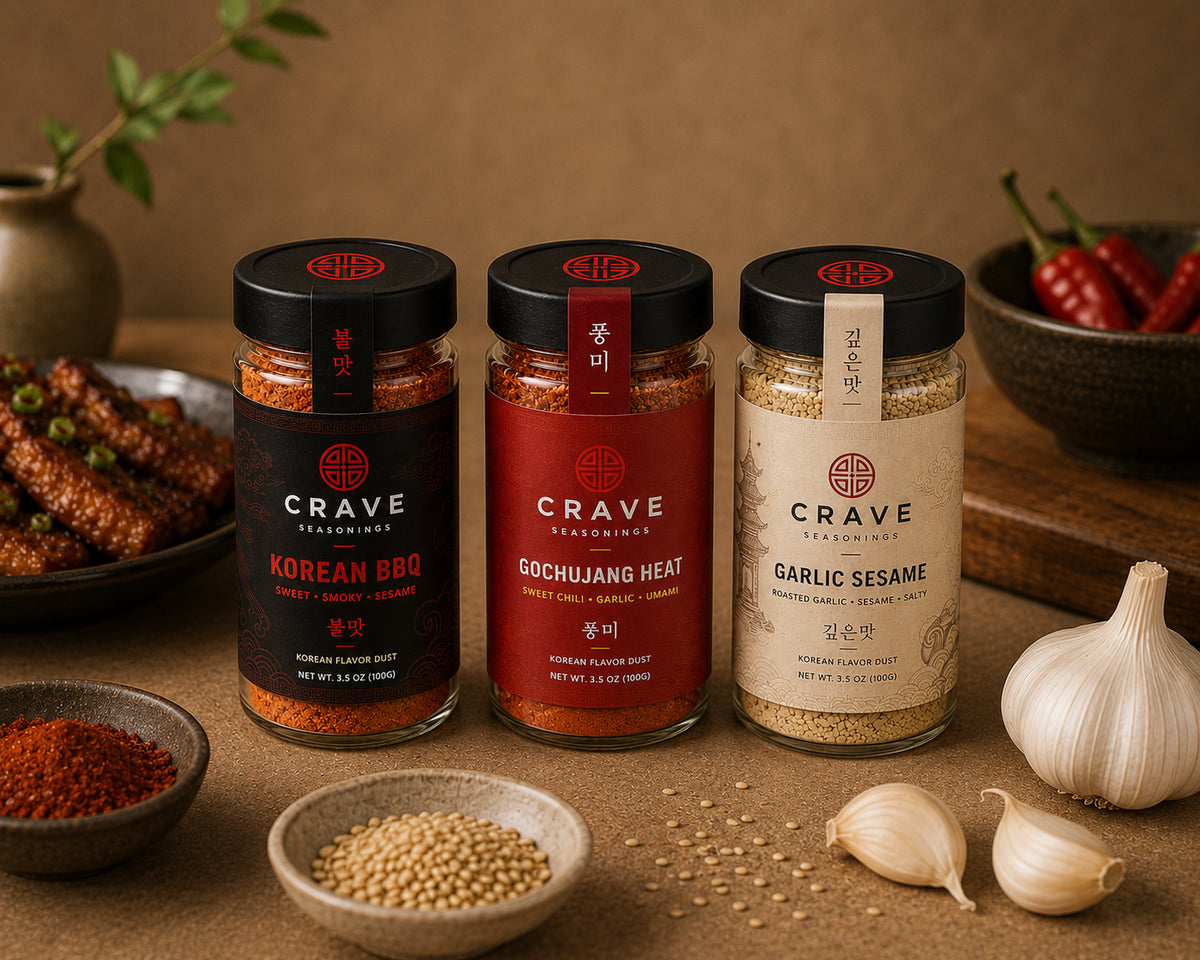
Start with: Kernel Kim Kimchi Pepper, our only spicy snack, at medium heat. If you cook, Crave Gochujang Seasoning brings the same kind of heat to home cooking.
A simple tasting plan
If you are trying Korean snacks with friends or family, go from mild to bold:
- GÖSO Injeolmi or Nurungji (toasty, not spicy)
- GÖSO Seaweed Sesame (savory)
- Kernel Kim Korean BBQ, then Bulgogi BBQ (sweet and smoky)
- Kernel Kim Kimchi Pepper (tangy heat)
Have water or barley tea on hand. It resets your palate between flavors and is what many Korean homes drink with meals anyway.
How Korean snacking is different
Korean snacks often sit closer to a meal than American ones. Roasted gim goes with rice. Nurungji ends a dinner. Popcorn and fried chicken go with a game. Thinking of them as part of eating, not just a sweet treat, is the easiest way to enjoy them. You can browse both lines on the Korean snacks collection.
FAQ
Are Korean snacks all spicy?
No. Many are nutty, toasty or savory. Among our snacks, only Kernel Kim Kimchi Pepper is spicy.
What is the most beginner-friendly Korean snack flavor?
Korean BBQ. It is close to American barbecue: soy, garlic and a little sweetness.
What is GÖSO?
GÖSO is Crave's Korean grain snack, a puffed and toasted grain crunch in five flavors: Injeolmi, Black Sesame, Nurungji, Korean BBQ and Seaweed Sesame.
What is Kernel Kim?
Kernel Kim is Crave's Korean seasoned popcorn in Bulgogi BBQ, Kimchi Pepper and Korean BBQ, in 4.6 oz (130g) bags.
More from the Korean Flavor Guide
Crave started from one simple idea: Korean flavor should be easy to enjoy at home. This guide is where we explain the flavors behind what we make, so you know what you are tasting before you open the bag or the bottle.
- What is injeolmi?
- Nurungji: Korea's toasted rice crust
- Kernel Kim popcorn flavors explained
- Korean snack gift ideas
Browse everything in one place: Korean snacks, Korean seasonings and Korean snack gifts.


Leave a comment
This site is protected by hCaptcha and the hCaptcha Privacy Policy and Terms of Service apply.